
HAIR RESTORATION
Hair Transplant in Bengaluru: Understanding FUE, FUT and Recovery
Editorial draft for clinical review
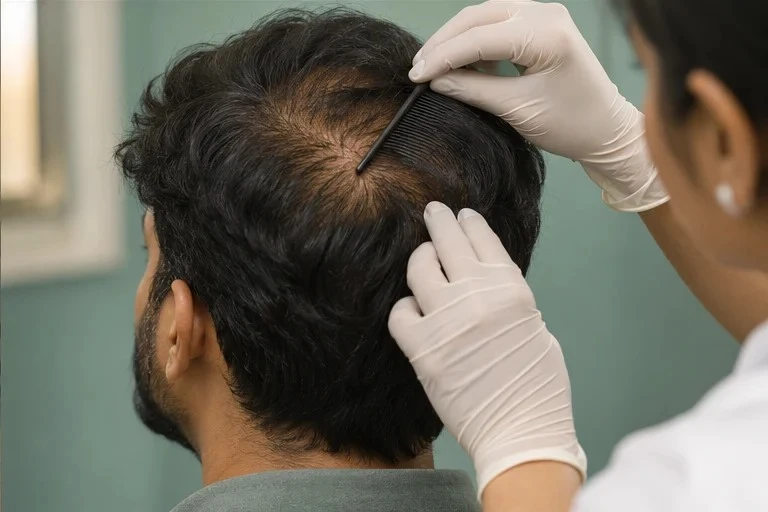
Hair loss can affect confidence, but not every type of hair loss requires surgery. For people considering hair transplantation in Bengaluru, the first step is identifying the likely cause and understanding the available options. A hair transplant redistributes existing follicles from a donor area to another part of the scalp; it does not create new hair follicles.
When is transplantation considered?
Hair transplantation may be appropriate for selected people with pattern hair loss and sufficient donor hair. The decision depends on age, hair-loss stability, scalp health, donor density, family history, medical conditions and expectations. Sudden hair loss or patchy shedding may require investigation rather than transplantation.
FUE and FUT: the difference
Follicular Unit Extraction (FUE) involves removing follicular units individually from the donor region. Follicular Unit Transplantation (FUT), sometimes called the strip method, removes a narrow strip of donor scalp from which follicular units are prepared. Both approaches have trade-offs related to scarring, harvesting, donor management and surgical planning. A surgeon should explain why one approach may be more suitable for a specific patient.
What happens during recovery?
Following surgery, patients may experience temporary tenderness, swelling, redness and scabbing. Transplanted hair shafts often shed before new hair growth becomes noticeable. Growth occurs over months rather than days, and the final appearance may take around a year or longer to assess. Postoperative instructions and follow-up are important.
Risks and limitations to understand
Potential problems include infection, bleeding, visible scarring, unnatural hairline design, poor graft survival or dissatisfaction with density. Existing non-transplanted hair can continue to thin. Some people may benefit from medication or other medical treatments alongside, or instead of, surgery.
Questions to ask your surgeon
Ask about the cause of your hair loss, expected donor-hair availability, who performs each part of the procedure, realistic density, future hair loss, expected downtime and total costs. Avoid promises of guaranteed growth or identical results for everyone.
Book a consultation
Considering hair restoration? Arrange an assessment to discuss whether non-surgical treatment or a transplant is appropriate for you.